
The Best Probiotic Yogurt (My Top Food for Gut Health)
If you’ve ever tried to figure out what the best probiotic yogurt is – in terms of the quality of cultures, and the benefits for gut health – most labels don’t tell you much. But there’s a lot more that goes into probiotic sourcing than you’d think.
I’ve loved yogurt since I was a kid; something about the combination of creamy and tangy just does it for me. But now, as a health-conscious adult with a certificate in plant-based nutrition, taste is only one of the factors that determine my selection of food brands – both for myself and what I recommend to others.
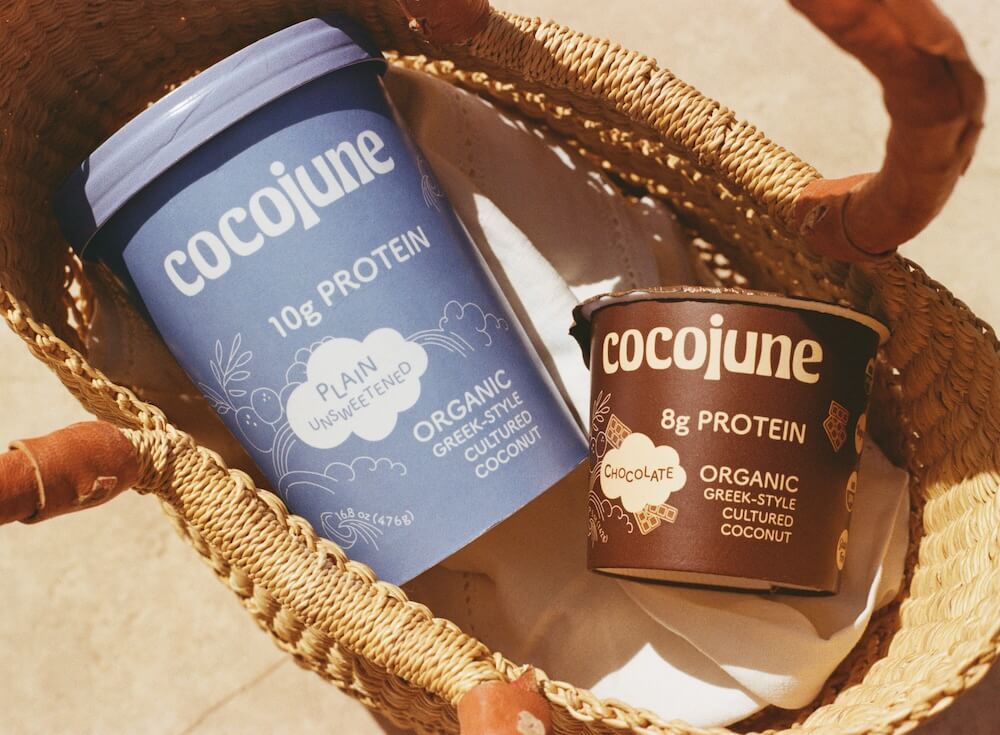
I discovered Cocojune* a few years ago, as I was very drawn to their Strawberry Rhubarb flavor when I spotted it at the market (it is superb, by the way). That one remains a favorite, but I’ve also become quite obsessed with the high-protein Greek Style yogurt they’ve rolled out, which is so tasty and ultra creamy.
Click here to receive a FREE 4 oz. container of Cocojune Pure Coconut yogurt!
Apart from Cocojune’s yogurt being objectively delicious, their organic coconut yogurt is made with supplement-grade probiotic strains (i.e. the kind you’d find in a high-quality probiotic capsule supplement), which is far from the norm.
Let’s get into what actually makes a probiotic yogurt worth eating, what’s inside Cocojune’s blend, and what the research says probiotics can (and can’t) do for your gut.
What makes for the best probiotic yogurt? (Hint: it’s the strains)
All yogurt is fermented with bacteria, but that doesn’t automatically make it a meaningful source of probiotics. The difference comes down to three things: which strains are used, how many there are, and whether they’re still alive when they reach your gut.
Strain-specific vs. generic “live and active cultures”
Probiotic benefits are strain-specific. Two bacteria in the same species can behave very differently in your body.
That’s why it’s important to look for the full strain name on a yogurt label. A label that reads, “Bifidobacterium animalis subsp. lactis BB-12,” for example, points you to a specific, studied organism. A label that just says “live and active cultures” tells you that fermentation happened, and not much else.
Why CFU count matters in probiotic yogurt (and why it isn’t the whole story)
CFU stands for colony-forming units, a measure of how many viable bacteria are in each serving. Research on probiotics is usually done at doses in the billions, so a meaningful CFU count is a good sign.
But more isn’t automatically better. A huge number of an unstudied strain isn’t more useful than a solid dose of a well-researched one. Look for both: a clear CFU count and named strains.
Survival matters most (getting probiotics to your gut while they’re alive)
Probiotics only work if they’re alive. Between the store shelf and your large intestine, they have to survive time, temperature, stomach acid and bile. Some strains handle that journey far better than others.
This is where strain selection pays off. Strains like BB-12 (which Cocojune uses, among other strains) have been studied specifically for their tolerance to acid and bile. Eating probiotics in a food like yogurt can also enhance the benefits for gut health, since the food matrix can buffer bacteria on their way through the stomach.
Inside Cocojune’s supplement-grade probiotic yogurt blend
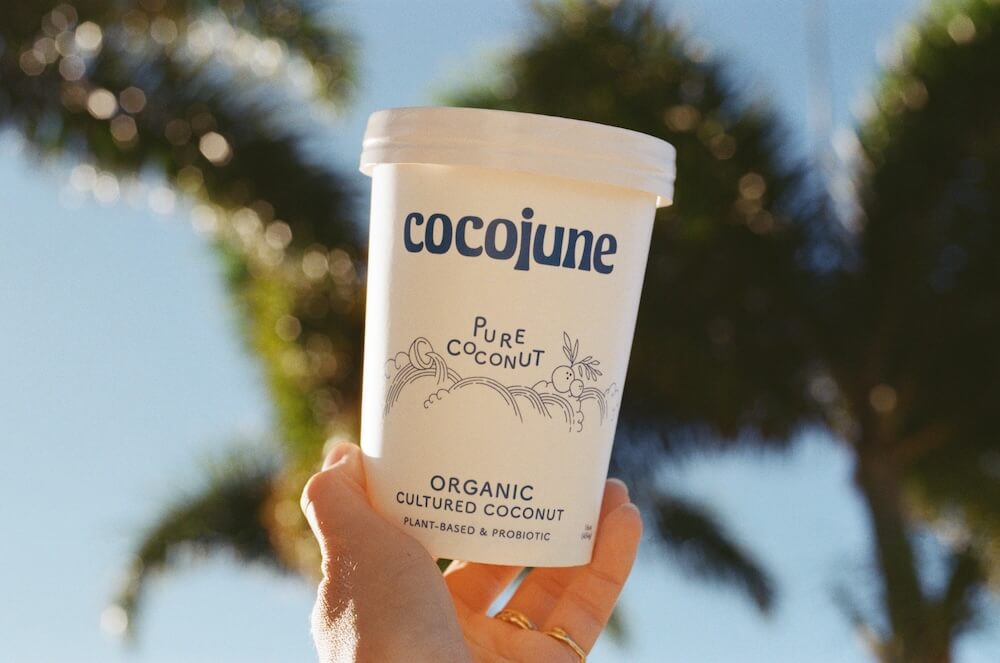
Here’s what sold me: Cocojune lists every culture on the label, and each 4 oz. serving delivers 30 billion CFU.
| Culture | Why it’s there |
|---|---|
| Bifidobacterium animalis subsp. lactis BB-12 | One of the most-researched probiotic strains in the world that’s known to support regularity, immunity, and even oral health. |
| Lactobacillus acidophilus LA-5 | A well-studied strain, often researched alongside BB-12, that helps maintain digestive balance, reduce gas and bloating, and restore gut flora after antibiotic use. |
| Lactobacillus paracasei CRL 431 | Another well-researched probiotic strain that can support seasonal immune function and allergies. |
| L. bulgaricus and S. thermophilus | Classic yogurt cultures that do the fermenting. |
BB-12 and LA-5: two of the most-researched probiotic strains
BB-12 has been the subject of hundreds of published studies, many looking at the probiotic’s benefits for digestion, regularity and immune support. LA-5 is often studied in combination with BB-12. Choosing strains with this kind of research history is what separates a supplement-grade probiotic from a generic culture.
30 billion CFU per serving vs. a typical probiotic capsule
Many probiotic supplements on the market land somewhere between 1 and 50 billion CFU per capsule. At 30 billion CFU per serving, Cocojune sits right in that range, in a food you’d eat for breakfast anyway.
Why Cocojune works with a Danish culture bank
Cocojune developed its probiotic blend with a leading Danish culture bank. The founders of Cocojune are Danish, and have particularly high standards for food quality and taste as a result. Specialized culture producers – such as the Danish culture bank that Cocojune sources from – grow and test strains to precise standards, which helps to ensure you’re getting the exact strain on the label, at a consistent potency, batch after batch.
How probiotics support gut health (what the research actually shows)
Your gut is home to trillions of microbes, collectively called your microbiome. Probiotics are beneficial bacteria that, in adequate amounts, can support that community.
What probiotics do in the gut
Well-studied probiotic strains have been researched for their role in:
- Digestive comfort and regularity, including occasional bloating and irregularity
- Microbiome balance, helping beneficial bacteria hold their ground
- Gut barrier support, the lining that separates your gut from the rest of your body
- Immune support, since a large share of immune tissue lives in the gut
Most probiotics don’t permanently move in. They act more like visitors who help while they’re passing through, which is why consuming them regularly is so important.
Why probiotic yogurt is such a powerful food for gut health
Yogurt is one of the easiest ways to get probiotics daily. The creamy food base can help to protect bacteria as they make their way through the stomach. And, it’s a daily habit; a capsule is easy to forget, but breakfast isn’t (for most of us).
What probiotics can’t do
Probiotics aren’t a cure-all. They won’t undo a diet low in fiber, and they aren’t a treatment for any medical condition, on their own. Effects also vary from person to person. So if you’re managing a digestive condition, are immunocompromised, or are on antibiotics, be sure to talk to your doctor before making probiotics part of your routine.
Beyond probiotics: Cocojune as an everyday food for gut health
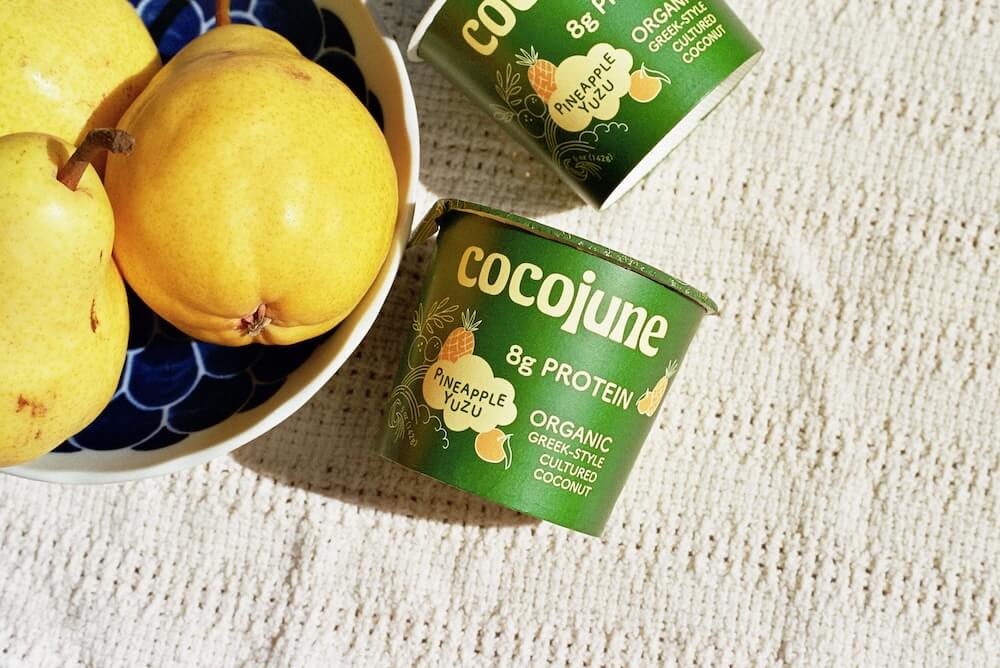
The probiotics are the headline, but the rest of the cup matters, too.
Organic coconut base, with options for no added sugar
Cocojune is made from simple, minimal ingredients built around a certified organic coconut base, with no added sugar in its unsweetened flavors. Their lightly sweetened flavors contain low added sugar; my personal favorite at the moment is the Raspberry Greek-Style yogurt (it literally tastes like raspberry cheesecake).
Added prebiotic fiber benefits
Many of Cocojune’s yogurts contain fiber from chicory root, Jerusalem artichoke, or agave. This inulin fiber contains prebiotics, which essentially help to feed the probiotics as they work through your gut.
Plant-based and dairy-free
If dairy doesn’t agree with you (and it doesn’t agree with the majority of the population) a probiotic yogurt made with dairy kind of defeats the purpose for many of us. Cocojune is vegan, dairy-free, gluten-free, and non-GMO, so you get the gut benefits without the trade-off.
How to add Cocojune’s probiotic yogurt to your routine
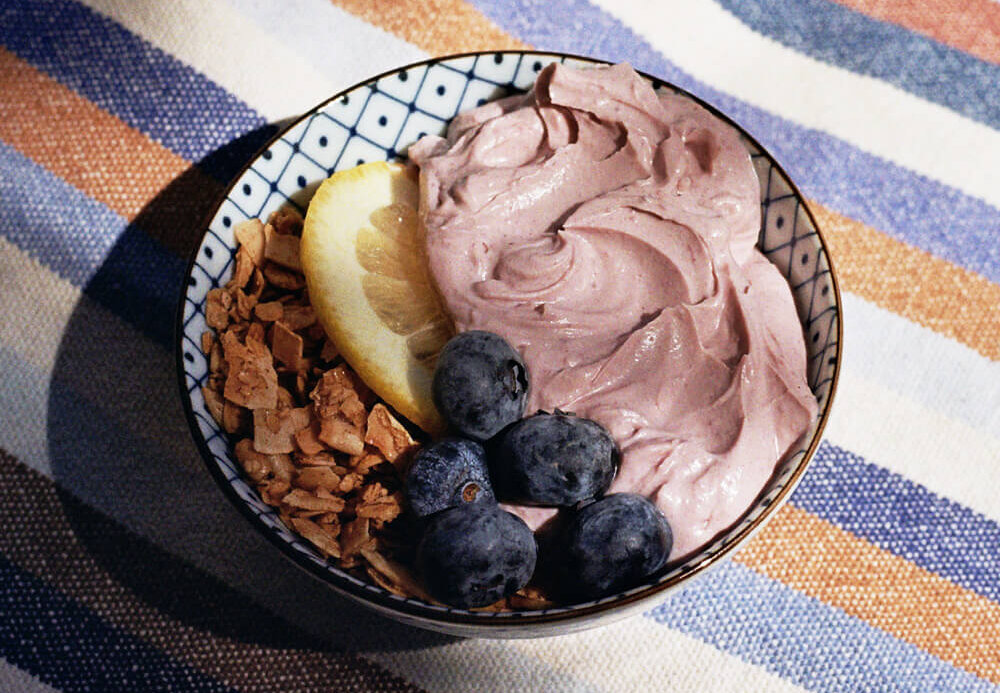
Consistency beats quantity with probiotics, so the goal is making Cocojune easy to eat most days.
Easy ways to eat Cocojune’s probiotic yogurt
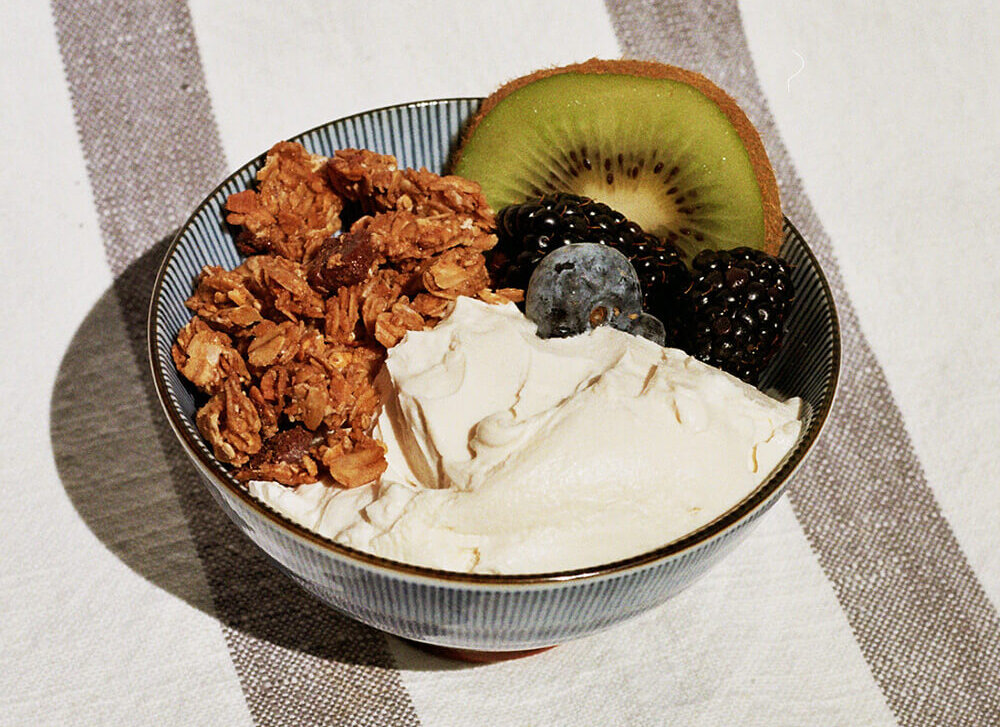
- Breakfast bowl: top with berries, granola, nuts, and hemp/chia/flaxseeds.
- Smoothies: blend in a few spoonfuls for creaminess and a probiotic boost (I do this nearly every day).
- Dressings: whisk the yogurt with tahini, lemon and salt for a creamy salad dressing.
- Dessert: layer dark chocolate shavings, almond butter and coconut for a delicious parfait.
- As a dairy-free dip: Cocojune also makes delicious dips in amazing flavors including Chipotle, Lemon Dill, and Tzatziki – enjoy with veggies or a healthy cracker!
One tip: add Cocojune to cold or room-temperature dishes. High heat can kill live cultures.
Pairing probiotics with other food for gut health
Probiotics work best as part of a gut-friendly diet, overall. Pair your Cocojune yogurt with:
- Fiber-rich plants: oats, beans, lentils, whole grains and vegetables.
- Prebiotic foods: onions, garlic, leeks, asparagus, spinach and slightly green bananas.
- Other fermented foods: kimchi, sauerkraut, tempeh and miso.
- Polyphenol-rich foods: berries, cocoa or dark chocolate, cinnamon and extra-virgin olive oil.
A good goal is to eat 30 different plants a week. Variety in your diet supports variety in your microbiome.
FAQs
Is plant-based yogurt as effective as dairy yogurt for consuming probiotics?
It absolutely can be. The probiotic value depends on the strains and CFU count, not whether the base is dairy or plant-derived. A plant-based yogurt with named, researched strains can match or beat a dairy yogurt with generic cultures. And because so many people find dairy to be disruptive to their gut, a plant-based option can be far more supportive for gut health, overall.
How much probiotic yogurt should I eat per day?
One serving per day is a simple, sustainable goal. For Cocojune, that’s 4 oz, which delivers 30 billion CFU.
Does heat kill probiotics in yogurt?
Yes. High heat kills live cultures, so be sure to add probiotic yogurt to cold dishes or stir it in after cooking. Be sure to keep it refrigerated, too.
What are the best foods for gut health besides yogurt?
Fiber-rich plants like beans, oats and vegetables; prebiotic foods like garlic, onions and asparagus; and other fermented foods like kimchi, sauerkraut and miso. Variety is key.
How is Cocojune a more sustainable food brand?
This is also something that really sets Cocojune apart. Not only are they experts in large-scale, slow fermentation, but every product they sell is made in a state-of-the-art, SQF-certified, fossil fuel-free facility. And, they are certified plastic neutral through a partnership with rePurpose Global.
The bottom line on why Cocojune is the best probiotic yogurt
The best probiotic yogurt tells you exactly what’s inside: named strains, a real CFU count and cultures chosen to survive the trip to your gut. Cocojune checks every box, with 30 billion CFU of supplement-grade strains like BB-12 and LA-5 in every cup.
Pair it with plenty of fiber and other fermented foods, eat it consistently, and you’ve got a simple, delicious food for gut health you’ll actually look forward to eating daily.
Click here to receive a FREE 4 oz. container of Cocojune Pure Coconut yogurt!
Find Cocojune products using their store locator. If you have any questions, drop me a line in the comments below!
*This post was sponsored by Cocojune. I only work with brands I’ve personally vetted, and will vouch for. These collaborations allow me to run this blog and keep my in-depth content free of charge for readers like you who want to learn more about vegan living.This content is for informational purposes only and is not medical advice.